

Sustainability at LGP
At LaGuardia Gateway Partners, sustainability is embedded in everything we do. Our commitment to environmental stewardship, social responsibility, and strong corporate governance drives how we operate, partner, and create long-term value for our stakeholders, our community, and the future of aviation.

Environmental Sustainability
We are committed to advancing meaningful environmental progress through responsible operations and continuous improvement.

Social Responsibility
We foster a culture of diversity and inclusion, uphold fundamental human rights, and invest in the communities we serve.

Corporate Governance
We operate with integrity and accountability, striving to be a trusted partner through responsible and transparent business practices.
Leed Gold Certification
LaGuardia Terminal B has achieved two LEED Gold certifications—recognizing excellence in both design and construction, as well as operations and maintenance. Developed by the U.S. Green Building Council, LEED (Leadership in Energy and Environmental Design) is the world’s leading green building rating system.
These milestones reflect a strong commitment to sustainability and environmental stewardship, including becoming the first airport project globally to earn LEED Gold v4 for design and construction.

Envision Platinum Certification
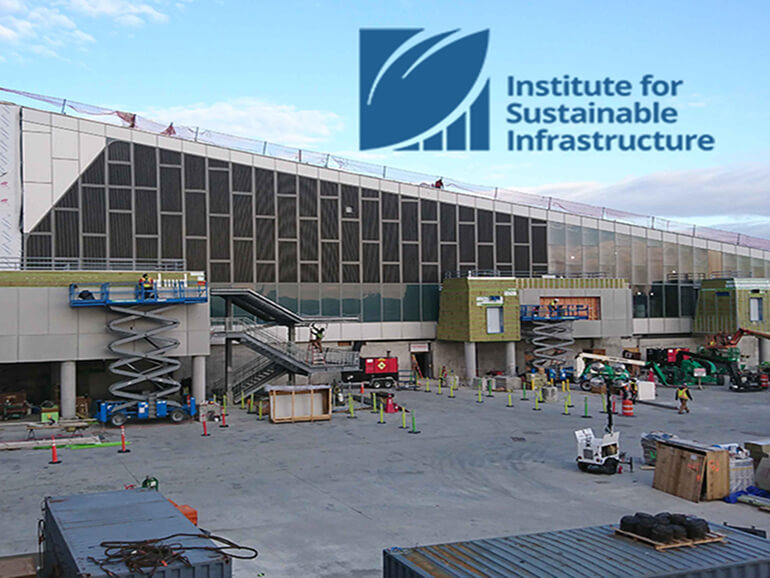
The Terminal B Redevelopment Project earned the first-ever Envision Platinum certification from the Institute for Sustainable Infrastructure—the highest level of recognition for sustainable infrastructure.
This achievement reflects a strong commitment to sustainability across design, construction, and community impact, setting a new benchmark for responsible infrastructure development.
Get Certified
Not yet certified as an MWBE or ACDBE? Learn how to become certified through the Port Authority of New York and New Jersey, NYS Department of Transportation or Empire State Development and unlock opportunities to work with Terminal B.
Our Commitment
Sustainability at Terminal B is driven by action. From energy use to resilience, we focus on six key areas that reduce environmental impact and support a more sustainable future for aviation.
Energy Efficiency
Terminal B is designed to use energy smarter at every level. The baggage handling system uses advanced magnetic motors that activate only when bags are present, reducing energy use by at least 37% compared to traditional systems.
Across the terminal, LED lighting, natural daylight, and smart controls like occupancy sensors and dimmers significantly lower energy demand, while demand-controlled ventilation delivers fresh air efficiently and enables “free cooling” when conditions allow.
Sustainable design choices—from solar hot water systems and water-efficient fixtures to reflective roofing and paving—further reduce energy use and greenhouse gas emissions. Real-time monitoring through the building management system ensures performance is continuously optimized.
Greenhouse Gas Emission Reduction
Terminal B reduces emissions both on the ground and at the gate. Electric ground power and preconditioned air systems replace traditional diesel-powered units, cutting fuel use, lowering emissions, and reducing noise.
In the parking garage, preferred spaces for low-emission vehicles and EV charging stations support cleaner transportation choices. On the airfield, airlines are transitioning to electric ground support equipment, with a goal of full electrification by 2030—eliminating on-site emissions and improving local air quality.
Building Material Transparency
As building design evolves, Terminal B prioritizes materials that are safer and more transparent. By selecting products with clear disclosures on lifecycle impacts and ingredients, we make more informed choices that reduce environmental and human health impacts.
Climate Change and Resiliency
Aligned with the Port Authority’s carbon reduction goals, Terminal B incorporates multiple strategies to cut greenhouse gas emissions. From dual taxi lanes for more efficient aircraft movements to electric ground power and preconditioned air at every gate, and a planned transition to fully electric ground support equipment, these measures advance the Port Authority’s mission to reduce GHG emissions by 80% by 2050 and help mitigate climate change impacts.
Water Conservation
Serving roughly 40,000 passengers and 5,000 staff daily, Terminal B is designed to conserve water wherever possible. EPA WaterSense–labeled fixtures in restrooms reduce potable water use by 42% compared with conventional systems.
Waste
LGP is committed to minimizing waste across Terminal B. More than 50% of waste is diverted from landfills through recycling programs for metals, glass, plastics, paper, and cooking oil, while Oscar AI units guide guests to sort correctly with real-time, interactive support.
Organic waste makes up over a quarter of the terminal’s waste stream, and composting programs diverted more than 500 tons in 2024. Complementing this, our food donation program redirected over 5.5 tons of edible meals to New Yorkers in need, keeping food out of landfills and supporting the community.
Supplier Diversity
At Terminal B, diversity is more than a value—it’s a cornerstone of our operations and development. We are proud to support and grow talented Minority and Women-Owned Business Enterprises (MWBEs), reflecting the spirit of inclusivity that defines New York City.
The Terminal B redevelopment project set a new standard for MWBE participation, with more than 300 firms contributing over $910 million in contracts—surpassing our $687 million goal. Their expertise and dedication were essential to making the new terminal a reality.
We also partner with certified Airport Concessions Disadvantaged Business Enterprises (ACDBEs) to bring diverse dining and retail experiences to travelers. Opportunities extend to terminal operations, maintenance, and professional services—MWBEs are invited to explore current RFPs or introduce their services at: [email protected].